tea mag · Issue 01 · 05 Interview
A Conversation with Barış Çekin
Co-Founder of Chado, on ritual, origin, and the long road from a niche curiosity to a tea company.
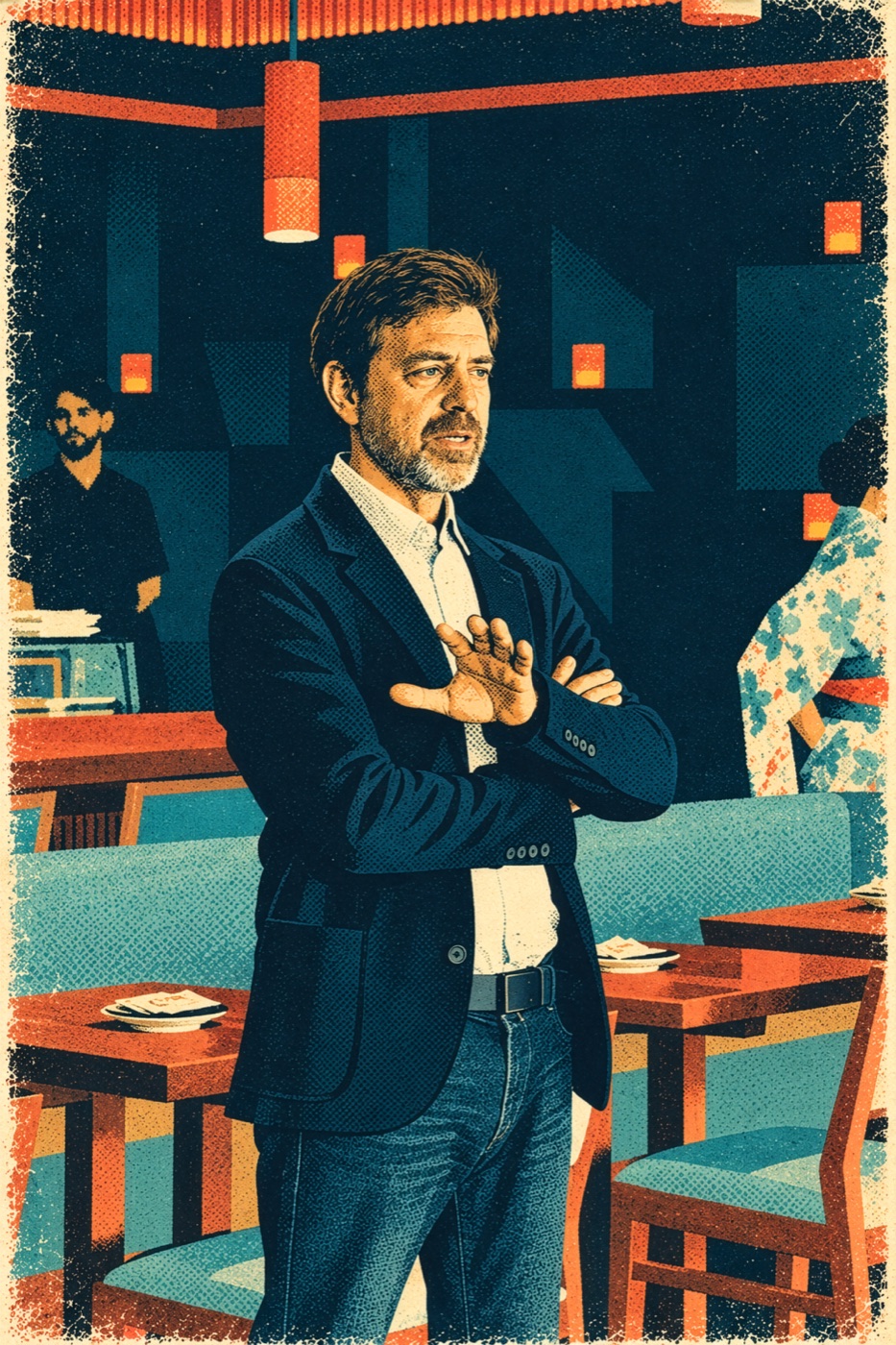
- Chado is often associated with matcha in Türkiye. But if you had to describe Chado in one sentence, what would it be?
- Chado is a bridge between traditional tea cultures and contemporary life. We work with tea, but what we are really interested in is ritual—those small moments during the day that help people slow down, focus, and connect with themselves and others.
- How did the story of Chado begin?
- The story began in 2007 with a simple curiosity. At that time, tea culture in Türkiye was largely limited to black tea and herbal infusions. While exploring tea traditions around the world, I became fascinated by Japanese tea culture and particularly by matcha. What attracted me wasn’t only the taste. It was the philosophy surrounding it—the attention to detail, the appreciation of simplicity, and the idea that preparing a cup of tea could become a meaningful ritual. That curiosity eventually became Chado. What started as a niche passion gradually evolved into a company importing, curating, and sharing teas from around the world.
- Why the name “Chado”?
- “Chadō” translates as “The Way of Tea” in Japanese. The word carries a deeper meaning than simply drinking tea. It refers to a lifelong practice of refinement, hospitality, mindfulness, and respect. We felt that philosophy represented what we wanted the brand to stand for. Chado is not only about tea leaves; it is about how tea can shape moments and relationships.
- You were introducing matcha to Turkish consumers long before it became a global trend. What was that experience like?
- When Chado introduced matcha to Türkiye in 2007, very few people had heard of it. There were no matcha lattes on café menus, no social media trends, and very little awareness of Japanese tea culture. At the beginning, much of our work was educational. We explained what matcha was, how it was produced, why it looked and tasted different from conventional green tea, and how it should be prepared. Looking back, it is remarkable to see how much awareness has grown. Today, matcha can be found almost everywhere, but our focus has never been on trends. What interested us in 2007—and what still interests us today—is craftsmanship, authenticity, and the cultural stories behind tea. In many ways, introducing matcha was not simply about launching a product. It was about opening a window to a broader tea culture.
- Chado now offers teas from many countries. What do you look for when selecting a tea?
- We look for character and origin. Many products today are designed to be standardized. Tea is different. We appreciate teas that reflect their terroir, harvest conditions, and craftsmanship. Whether it is a Japanese sencha, a Taiwanese oolong, a Chinese pu-erh, or a handcrafted herbal blend, we want it to tell a story about where it comes from and the people who produced it.
- Chado often talks about “Slow Tea Society.” What does that mean?
- Modern life rewards speed. Tea invites the opposite. Slow Tea Society is our way of encouraging people to create intentional pauses throughout the day. It doesn’t require a formal tea ceremony. It can be as simple as preparing a cup of tea without checking your phone. For us, tea is not only a beverage. It is an excuse to slow down and pay attention.
- Many people see tea as a traditional beverage, while others associate it with wellness. How do you view tea?
- Tea has always adapted to the needs of each generation. For some people, tea is tradition. For others, it is hospitality. For others, it is wellness, focus, or creativity. What fascinates me is that tea can be all of those things simultaneously. It has remained relevant for thousands of years because it continues to evolve while remaining connected to its roots.
- What is something people misunderstand about tea?
- Many people think tea is simple. In reality, tea is one of the most complex agricultural products in the world. Harvest timing, cultivar selection, terroir, processing methods, oxidation levels, roasting techniques—every detail affects the final cup. Wine and coffee have long received recognition for this complexity. Tea deserves the same appreciation.
- Finally, if you could serve one cup of tea to every reader of this magazine, what would it be?
- I would choose an aged Pu-erh from Yunnan, China. Pu-erh is a tea that rewards patience. Unlike many teas that are enjoyed for their freshness, a well-aged Pu-erh develops character over time. Its aromas become deeper, its texture smoother, and its flavor more layered and complex. What fascinates me most is that the tea continues to evolve throughout the session. The first infusion might offer notes of earth, wood, and dried fruit. A few infusions later, new dimensions emerge—perhaps hints of camphor, dark honey, forest floor, or sweet spices. It feels less like drinking a beverage and more like having a conversation that gradually reveals itself. For me, Pu-erh represents one of the most sophisticated expressions of tea culture. It reminds us that some of the most rewarding experiences cannot be rushed. They unfold slowly, infusion by infusion, over time.
The finest teas do not reveal themselves immediately. Neither do the finest things in life.